
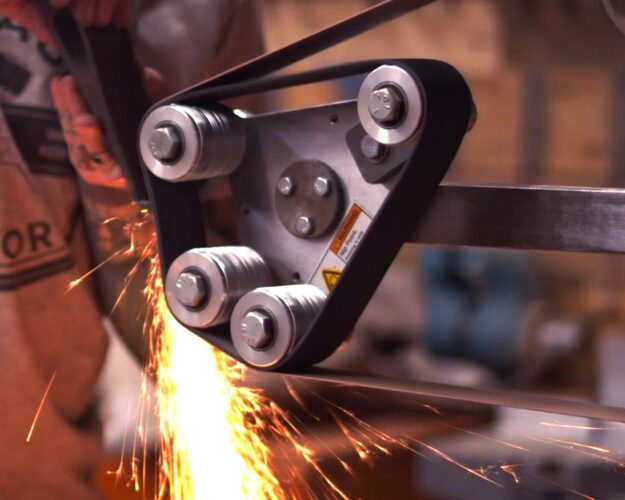
Unveiling the Power of Coated Abrasives in the Metal Industry
Introduction
In the metal industry, precision, efficiency, and achieving superior surface quality are paramount. To meet these demands, professionals rely on a wide array of tools and techniques, and one indispensable tool that has revolutionized metalworking is coated abrasives. Coated abrasives play a pivotal role in the metal industry, providing versatility, control, and exceptional finishing results. In this article, we will delve into the significance of coated abrasives in metalworking, exploring their advantages, diverse applications, and emerging trends in the industry.
Understanding Coated Abrasives
Coated abrasives are abrasive materials composed of a substrate, typically cloth or paper, to which abrasive grains are securely adhered using a bonding agent. The abrasive grains can be made from materials such as aluminum oxide, silicon carbide, or ceramic. The coating is applied precisely, ensuring optimal cutting, grinding, and finishing capabilities.
Advantages of Coated Abrasives
1. Versatility: Coated abrasives offer versatility by providing a wide range of grit sizes, making them suitable for various metalworking applications. From aggressive material removal to fine finishing, coated abrasives can accommodate diverse tasks and meet specific requirements.
2. Controlled Material Removal: Coated abrasives allow metalworkers to have precise control over material removal. The grains on the abrasive surface provide uniform cutting action, enabling professionals to remove unwanted material while maintaining accuracy and preserving the integrity of the workpiece.
3. Consistent Performance: Coated abrasives deliver consistent performance throughout their lifespan. The even distribution of abrasive grains ensures uniformity and reliability, resulting in predictable outcomes for metalworkers.
4. Surface Quality Enhancement: Coated abrasives excel in improving surface quality, providing metalworkers with smooth, flawless finishes. Their precise cutting action removes imperfections, such as burrs, weld splatter, or oxidation, resulting in refined surfaces ready for subsequent processes or final applications.
Applications of Coated Abrasives in Metalworking
1. Stock Removal: Coated abrasives are indispensable for initial stock removal processes in metalworking. Whether it’s removing excess material from castings or rough shaping of metal components, coated abrasives efficiently and effectively prepare the workpiece for further refinement.
2. Grinding and Deburring: Coated abrasives are extensively used in grinding and deburring operations. They facilitate the removal of sharp edges, burrs, and unwanted material from metal surfaces, ensuring a smooth and safe end product.
3. Surface Preparation: Coated abrasives play a vital role in surface preparation for painting, coating, or bonding applications. They are used to clean, smooth, and create an ideal surface profile for optimal adhesion, enhancing the overall quality and longevity of the metal product.
4. Finishing and Polishing: Coated abrasives are instrumental in achieving impeccable finishes in metalworking. They refine surfaces, eliminate scratches, and provide a consistent and uniform appearance, contributing to the aesthetic appeal of the final product.
Evolving Trends in Coated Abrasives
1. Advanced Backing Materials: Coated abrasives are witnessing advancements in backing materials, such as polyester films or flexible cloth, providing increased durability, flexibility, and conformability. These developments allow metalworkers to tackle intricate shapes and challenging surfaces with ease.
2. Specialty Coatings: Coated abrasives with specialized coatings are emerging to address specific metalworking requirements. Anti-loading coatings minimize clogging, while lubricating coatings reduce friction and heat generation, extending abrasive life and enhancing efficiency.
3. Environmentally Conscious Solutions: The metal industry is embracing environmentally conscious coated abrasives. Manufacturers are incorporating water-based adhesives and utilizing recycled materials for the substrate, reducing environmental impact while maintaining high-performance standards.
Conclusion
Coated abrasives have become
an integral part of the metalworking industry, providing metalworkers with versatility, precision, and exceptional surface finishes. Their ability to remove material efficiently while maintaining control and consistency makes them indispensable in a wide range of metalworking applications. As technology continues to advance, coated abrasives will continue to evolve, offering even more specialized solutions and environmentally friendly options, driving the metal industry forward towards higher levels of efficiency and quality.

